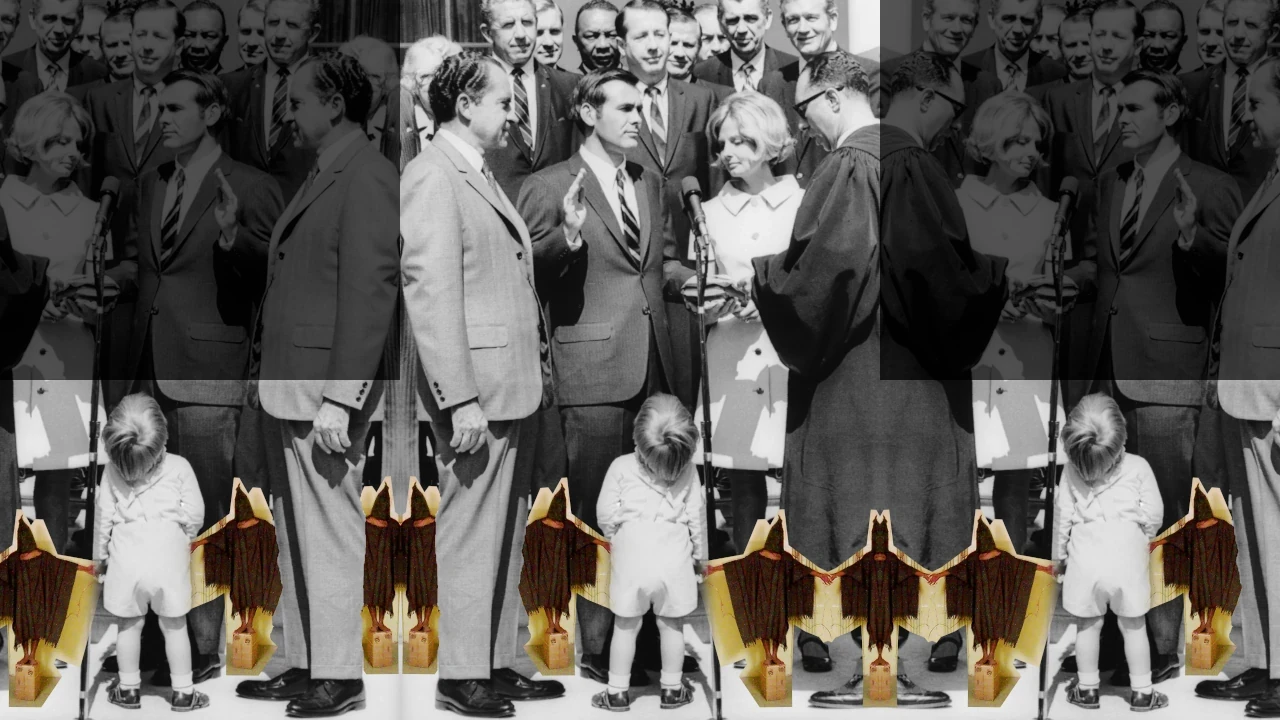
Rumsfeld's Snowflakes
[ sources ]
Public Radio's flagship drive-time news program ran a four minute piece about the Snowflakes in 2018. The guest was Nate Jones from GWU's National Security Archive who had obtained "thousands of memos" following "a six-year fight with the Department of Defense." McEvers describes "tens of thousands of memos" written "from 2001 to 2006" that "were known as snowflakes -short, to the -point messages about everything from his dentist appointments to battlefield tactics." The rest of the interview follows using this five year war on terror frame for snowflakes instead of the public/private yellow peril snowflakes of the 1970s. This abridged historical period starts with 9/11, includes Afghanistan and Iraq and ends in the "current [Trump] administration" with "key players today like Secretary Mattis and General Flynn." Jones thinks it "incredibly important" to have "the benefit of an actual chronology for a story" to learn from. The problem with this version of the story is the frame. Jones is the director of the FOIA project at GWU--he has access to the historical ironies pointed out by Morris and the longer chronology described by MacFadden. My frustration is described by Jones in disciplinary terms "journalists get the first crack, and then historians have a lot more resources to take on the second crack." This is true. But in the Rumsfeldian Snowflake context: obfuscatory instruments were not invisible, just confusing. And they have been common knowledge since the 1970s. Jones wasn't hampered by a lack of knowledge, disingenuousness or an ahistorical frame. The problem here is the format. Four minutes isn't enough time to start this conversation. The radio introduction was probably prerecorded and the McEvers' initial question sets the 9/11 to Donald Trump frame.
The more traditional NYT obit is by a long time writer for the paper with a Pulitzer to his name. McFadden is a midwesterner of Rumsfeld's generation. The obituary is fawning, "he seemed like an All-American who had stepped off the Wheaties box -- a strikingly handsome Midwesterner radiating confidence, taking on big tasks and doing everything well..." Including a "fortune [made] as an executive with pharmaceutical, electronics and biotechnology companies." His private sector exploits came "[b]etween Pentagon stints." An interesting piece about his time in the Nixon administration, "as the Watergate scandal began to disrupt the White house in 1973, Mr. Rumsfeld was named ambassador to [NATO]. He was thus in Brussels when Nixon and many of his top aides were forced to resign." He was "called back" by President Ford in 1974 to be chief of staff. McFadden does include a section Memos Like Snowflakes. This section is also hagiographic "he learned fast and tried to fit into the [Pentagon's] macho military world by demonstrating his one-handed push-ups and his prowess on the squash court." The snowflakes are "a hallmark of Rumsfeld communications in government and the private sector..." that he brought to the Pentagon during the Ford administration.
Some highlights from the snowflakes section include post Vietnam cold war military spending, "outmaneuver[ing] Mr. Kissinger spectacularly by withdrawing Pentagon support for an arms control agreement" with Moscow in 1976, getting the Presidential Medal of Freedom in 1977, investing in NutraSweet which was approved by the FDA in 1985, selling that company to Monsanto, he was Regan's special envoy to the Middle East where "he became a conduit for extending American intelligence and military aid to Iraq..." and Saddam Hussein in a proxy war versus Iran and running for president in 1988 and 1996. There is no real reason that the period between becoming Defense Secretary in 1975 and the presidential runs are different from the next section: Making His Fortune. The second fortune he made, after Nutrasweet, was in High Definition Television--another industry regulated by the federal government under the FCC. He made his third fortune as chairman of Gilead (maker of Tamiflu) during the bird flu epidemic of 2001. He was also invested in the defense industry while working for the Executive Department.
Morris directed a Rumsfeld biopic in 2013. The NYT opinion piece also functions as an obituary. In it, Morris describes Rumsfeld's snowflakes, "[h]e played a role in making memo-writing the new frontier in governmental accountability. He also pioneered the memo as an obfuscatory instrument. Write one memo saying one thing, write another memo saying the exact opposite." Rumsfeld's paper trail is described by Morris as "a man lost in his endless archive, adrift in a sea of his own verbiage." The irony of the Iraq war snowflakes, obtained through FOIA requests, is that Representative Rumsfeld of Illinois co-sponsored the Freedom of Information Act. To combat FOIA era transparency, Rumsfeld learned to "marginalize the record, to litter it with so many contradictions that a rebuttal to any future historian could always be found." These memos were first called "yellow perils" and then became "snowflakes." The method is described by Morris as "genius...the founder of the Freedom of Information Act is the guy who figured out how to render it almost totally worthless." Rumsfeld, in this post-truth-speak world, is "the epistemologist from hell" who traded in "the appearance of thought floating over the surface of things...masking an underlying absence of anything."